Where It Goes: What Happens After the Van Door Shuts
Once your couch is down the stairs and the doors are shut, most crews vanish and you never find out what happened next. Fair enough, but you should be able to. This is the honest account of where a Manly load actually goes: the streams that get recycled, the regulated ones that must go to licensed facilities, the green waste that becomes mulch, and the short list of things we will not load at all, with who legitimately takes those instead.
One load becomes six or seven things
The moment a pickup is off the stairs and onto the tailgate, it stops being one thing called rubbish. A single flat clear-out is usually a fridge, a mattress, a dead television, a couch, a few bags and a box of the odd stuff, and those are not one problem, they are six, each with its own proper home.
Sorting it there, by hand, is the unglamorous half of the job that nobody photographs. It is also the half that decides whether your old flat contents get a second life, a licensed facility or a hole in the ground. A crew that skips it just drives the lot to the cheapest tip, and the mattress that could have been pulled apart gets buried whole.
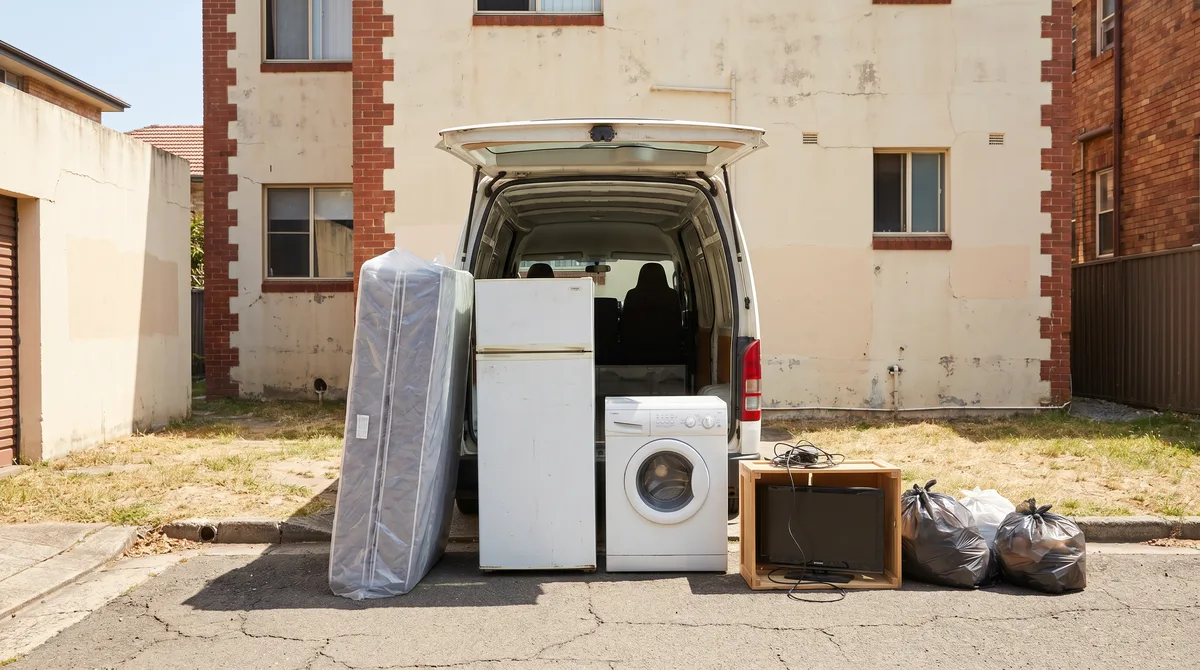
We would rather show you the boring version. The photo is a real Manly load, laid out the way it leaves: the mattress to one side, the whitegoods together, the e-waste in its own crate, the general bags kept separate. From here, everything goes its own way.
Stream by stream, where it actually goes
These are the common streams out of a Manly flat and the honest destination for each. No stream here goes to landfill by default; the whole point of sorting is that most of them do not have to.
Fridges, freezers & air-con
To a metal recycler, after degassingThe refrigerant inside is a controlled substance, so a licensed technician draws it off before the steel is recycled. A fridge is never crushed with the gas still in it.
Other white goods & scrap metal
To a metal recyclerWashers, dryers, ovens, microwaves, bed frames, the retired barbecue. Metal is one of the streams that recycles cleanly, so it is pulled out and sent to be melted back down.
E-waste
To a licensed e-waste recyclerTelevisions, computers, monitors, printers and the drawer of dead phones. E-waste cannot lawfully go in general rubbish in New South Wales, so it goes to a facility that recovers the metals and glass.
Mattresses & bed bases
To a mattress recyclerA mattress is pulled apart rather than buried whole: the steel spring, the foam and the timber frame each go their own way. It is a bulky, awkward stream, which is exactly why it needs its own one.
Green waste
To mulch, where practicalPrunings, palm fronds, hedge trimmings and the garden bags. Where a load is clean green waste, it is sent to be shredded into mulch instead of going to landfill. More on that just below.
Cardboard, glass & containers
To standard recyclingThe flattened boxes, the bottles and jars, the clean paper and the drink containers. Ordinary recyclables get pulled from the load and sent the same way your yellow bin goes.
Sound furniture that still has life in it is set aside for reuse or donation before anything else happens to it. And the honest bottom of the pile: the broken, the mixed, the soft plastics and the things no stream will take go to a licensed transfer station. We are not going to pretend that part away. Under New South Wales law the crew that carries waste holds a duty of care to deliver each type to a facility lawfully able to receive it, and that duty is the whole reason the sorting happens at all.
The regulated-waste and duty-of-care rules sit with the NSW EPA under the Protection of the Environment Operations Act. For where local material ends up, the Northern Beaches Council where your waste goes page is the plain-English version. Treat their pages as the final word; ours is the carrying and the sorting.
Why green waste gets kept clean
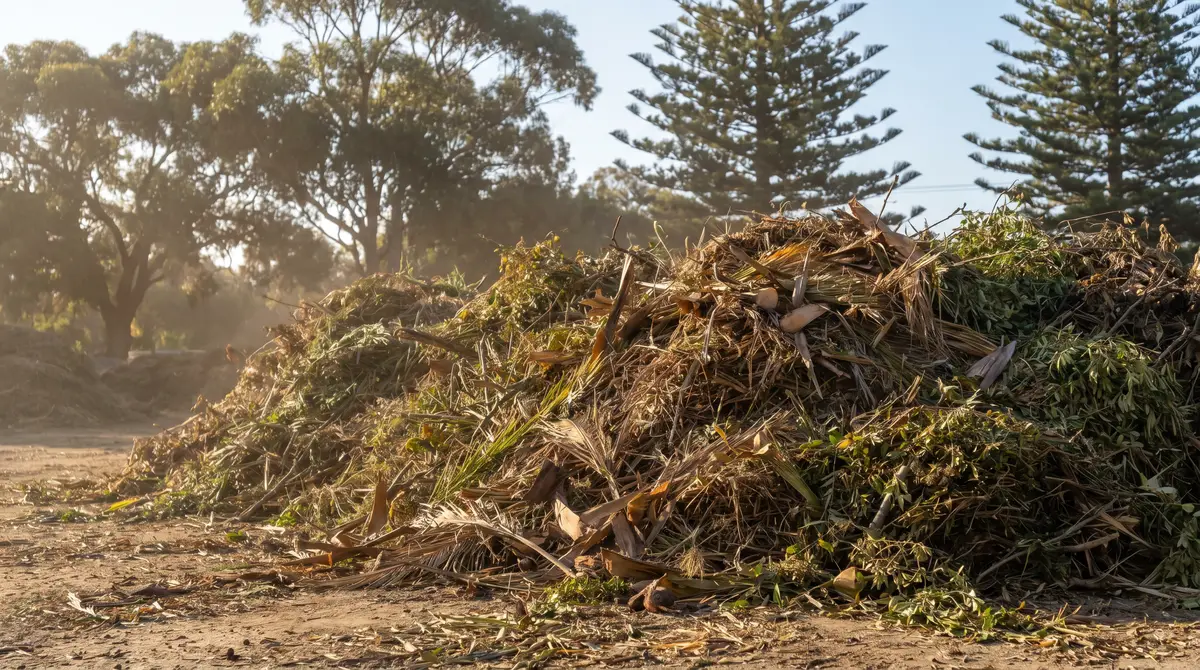
Manly's house streets, and the steep garden blocks up in Balgowlah Heights and Seaforth, throw off a lot of green: hedge prunings, palm fronds, the lantana someone finally lost patience with. Kept on its own, that load has an easy and genuinely good ending. It is shredded into mulch and put back to work, rather than taking up space in the ground.
The catch is the word clean. Green waste only mulches if it stays green waste, so a load with a broken pot, a length of treated pine or a bag of household rubbish tangled through it drops out of the mulch stream and back to general waste. When we quote a green-waste job we keep it separate on the van for exactly that reason.
Note the honest hedge in all of this: mulched where practical. On a mixed pickup, where the garden bag is riding with the couch and the dead microwave, we sort what we sensibly can, and we will not dress up a mixed load as a green one.
What we will not load, and where it should go instead
A handful of things are not ours to carry, for good reason: they are dangerous, they are regulated separately, or they need a specialist we are not. Refusing them is not us being difficult, it is the difference between a load that is disposed of lawfully and one that is not. Here is each one and where it legitimately goes, most of it free.
| What we will not take | Where it legitimately goes |
|---|---|
| Asbestos | Old fibro sheeting, backing board and some vinyl. A licensed asbestos removal contractor handles it and it is buried at a landfill lawfully licensed to accept it. Never in a general load, never by us. If you suspect it, stop and tell us so we can point you to the right specialist. |
| Paint | Free at a Paintback drop-off. Kimbriki Resource Recovery Centre is one, and it takes household and trade paint at no charge within the program limits. |
| Chemicals, solvents & poisons | Motor oil, pool chemicals, weedkiller, cleaners and the like go to a free NSW EPA Chemical CleanOut collection day, or a Community Recycling Centre. They must never go down a drain or into a bin. |
| Gas bottles | The barbecue and camping bottles, full or empty. Dropped free at Kimbriki, or swapped at any swap-and-go. Pressurised and not for a van or a tip face. |
| Batteries, fluoro tubes & smoke detectors | A Community Recycling Centre takes these free. Loose batteries especially, they start fires in trucks and at facilities. A sealed battery inside a fridge or an e-waste item, we handle as part of that stream. |
| Clinical waste & sharps | Needles, syringes and medical waste go to a community sharps-disposal or pharmacy return program, in an approved container, never loose in a bag. |
Never freelance the hazardous stuff
Tipping paint down a stormwater drain, hiding a gas bottle in a skip or slipping chemicals into the council pile is illegal dumping, and the fines are serious. It is also genuinely dangerous for whoever handles the load next. If any of the above is in your clear-out, that is not a dead end: raise it on the callback and we will name the free drop-off that takes it, rather than load it and hope.
- Local drop-off details verified July 2026 against the Northern Beaches Council hazardous-waste and A to Z disposal pages, the NSW EPA Chemical CleanOut, and Kimbriki's what-can-I-bring guide. Programs and limits change, so check theirs before you drive out.
Why there is no recycling percentage on this page
You will notice this page never says we divert some tidy figure like ninety per cent from landfill. That is deliberate. An honest diversion number depends on the exact load, the mix of streams in it and which facilities happen to be open that day, and a single crew carrying a couch down a walk-up cannot audit a weighbridge to prove one. A round number that sounds precise but is not is just a nicer-looking guess.
So instead of a percentage, you get the thing underneath it: each stream named, and the kind of facility it goes to. On a commercial or office clear-out where you need it documented, we can tell you which facilities the load's streams were taken to. What we will not do is invent a statistic to put in a brochure.
Disposal questions, straight answers
Do you recycle everything?
No, and anyone who tells you they recycle one hundred per cent of everything is guessing. We sort the load so the recyclable streams get recycled, the regulated ones go to licensed facilities, and only the genuinely broken and mixed leftovers go to a licensed transfer station. Where each thing goes is the whole point of the table above.
What actually happens to my old fridge?
The refrigerant gas is a controlled substance, so a licensed technician draws it off before the steel is recycled, rather than the unit being cut open and vented. A fridge is never simply crushed with the gas still in it. You do not have to arrange any of that; it is built into where the appliance ends up. The full version is on the appliance and e-waste page.
Can I put e-waste in the council bulky-goods pile?
No. Televisions, computers and anything with a plug or a circuit board are excluded from the council kerbside collection, which is one of the surprises that catches unit dwellers out. Drop it at a licensed facility such as Kimbriki yourself, or let it ride in the van with the rest of the load. The council-cleanup guide covers what the free scheme will and will not take.
Where does the un-recyclable stuff actually end up?
A licensed transfer station, honestly. The soft plastics, the broken and the mixed leftovers that no recycling stream will accept go there, and we are not going to pretend that part away. Sorting first is what keeps that pile as small as it can honestly be, rather than sending the whole load to the cheapest hole.
Is it really sorted, or does it all go in one hole?
It is genuinely sorted, and the photo up the top is a real load laid out the way it leaves. The mattress, the whitegoods, the e-waste and the general bags are kept apart from the tailgate onward precisely so each can go where it should. A crew that tips the lot in one bin is faster and cheaper for them, and worse for everyone downstream.
Do you take paint, chemicals or gas bottles?
No, and we would not load them and hope. Paint drops free at a Paintback site such as Kimbriki; household chemicals go to a free NSW EPA Chemical CleanOut day or a Community Recycling Centre; gas bottles are taken free at Kimbriki or swapped at a swap-and-go. Tell us what is in the mix and we will steer you to the right one before you drive anywhere.
Can you give me a recycling percentage or a certificate?
We can tell you which facility each stream from your load was taken to, and for a documented commercial job we will put that in writing. We do not print a recycling percentage, for the reason set out above: an honest figure depends on the load and the day, and a made-up one helps nobody.
Tell us what needs to go
Fill in the form and the callback comes from the crew, not a call centre. We look at the load, the whole number is settled before the first lift, stairs and all. Then it is carried down, swept up and gone, never left on the kerb.
- Small jobs taken seriously, one couch is plenty
- Fixed price agreed up front, no hourly surprises
- Same-day where we can, booked around your building