
Rubbish Removal Seaforth & Clontarf
Over the Spit Bridge the land tilts hard toward the water. The homes get bigger, the blocks get steeper, and the gardens terrace down toward Middle Harbour. Two things fill a load up here: a renovation that finally happened, and a garden that quietly got away. And tucked below on the foreshore, tiny Clontarf, where almost nobody sells, so when a home does change hands the clear-out runs decades deep. We do the lot, carried up the drive by hand, for one fixed price named before we start.
The gradient is the whole job
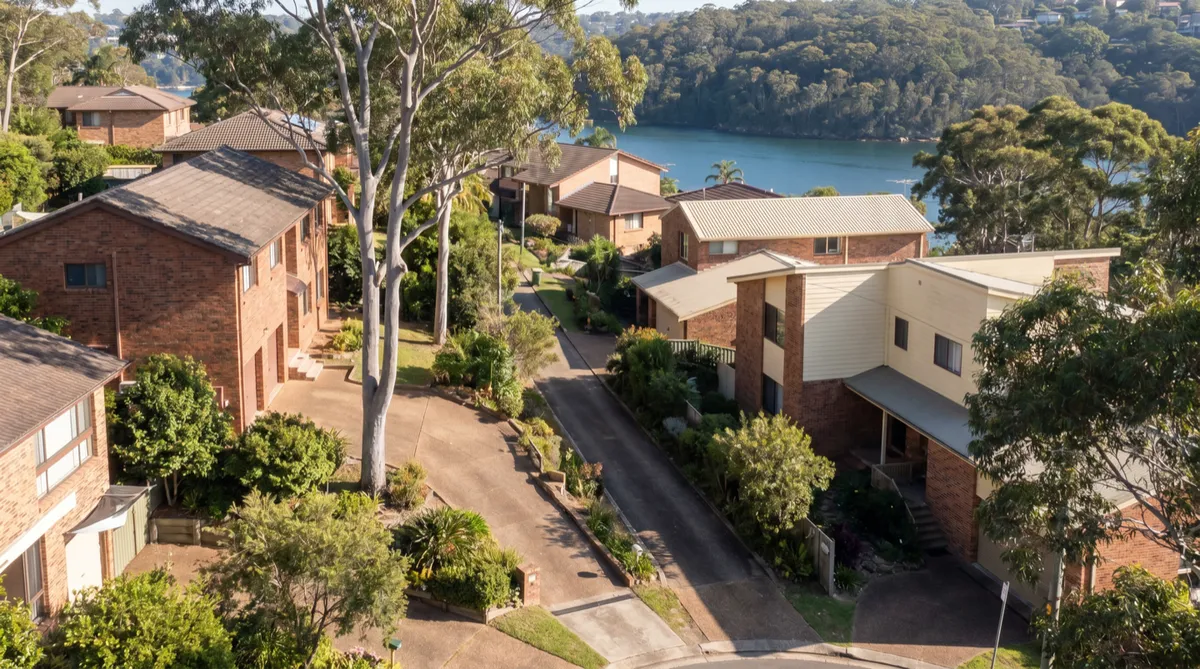
Seaforth is where suburban Sydney runs out of flat ground. Sydney Road climbs up off the bridge and the streets peel away down the hillside, big brick-and-render family homes stepping down terraced blocks with the harbour laid out below them. It is a lovely place to own a house and a genuinely awkward place to get a load off one.
Because the garden falls away beneath the house, the rubbish tends to gather at the bottom of the block, and every armful has to travel back up a drive with real gradient to wherever a truck can legally pull in. That is the mirror image of the walk-up flats down in Manly: there the couch goes down three flights, here the prunings and the old kitchen come up the drive. Either way the lifting is the easy bit. The access is the job itself, and local legs beat strong ones.
None of that is a complaint about the place. It is just the shape of a job here, and it is a shape we plan the pickup around before we turn up, rather than standing at the top of your drive working it out on the day.
A big home on the harbour is always mid-project
Seaforth houses are large, comfortable and forever being improved: a kitchen this decade, a bathroom the next, the deck and the downstairs after that. Every one of those jobs throws off rubbish, and it almost never leaves in a single tidy pile. It comes in waves, and the builder's skip rarely covers all of them. Here is how a reno actually sheds its load, and where we come in on each.
The strip-out
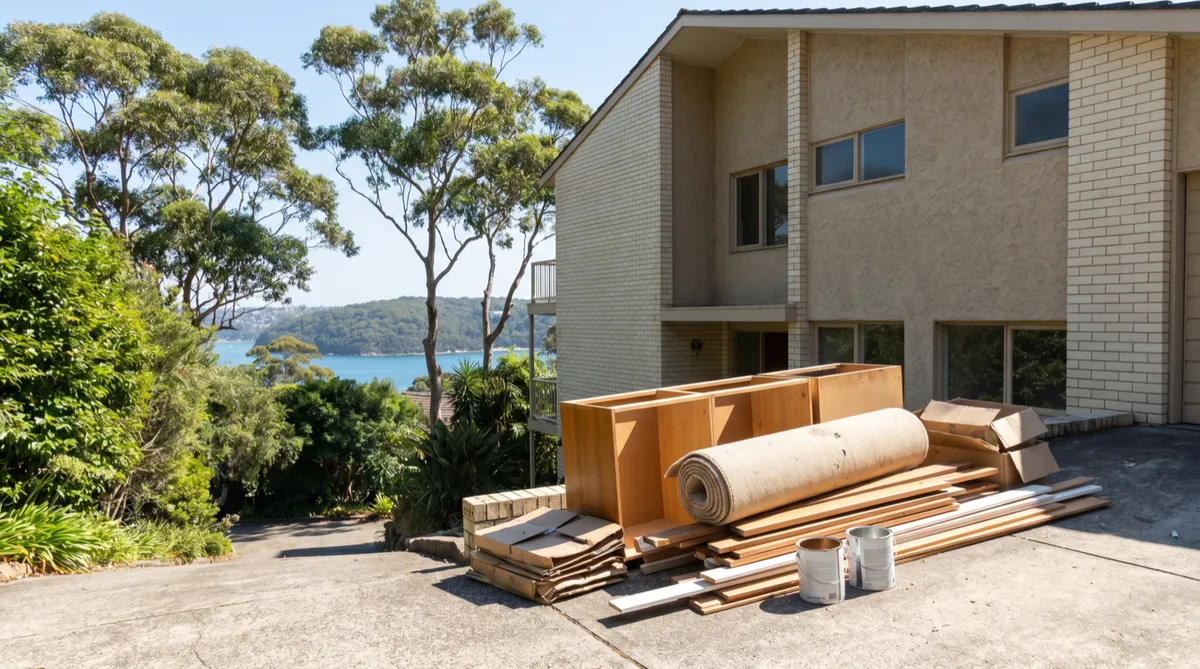
Day one, the old house comes out: the ripped-out kitchen carcasses, the tired bathroom vanity, carpet rolled and dragged to the carport, the pulled-up floorboards and the built-in that finally went. The skip fills by lunchtime and the overflow starts stacking up on the drive.
Between the trades
Mid-build, the packaging arrives faster than the skip empties: the cartons the new appliances came in, timber and plasterboard offcuts, the tile crates and the pallet they rode in on, the empty render bags. None of it structural, all of it in the way of the next trade through the door.
The reveal
At the end the protection comes off: the dust sheets and the floor cardboard, the last paint tins, the wrapping off the light fittings and the tapware, the odd offcut nobody claimed. The bit between finished and ready for the photos, cleared in one quiet trip.
Whichever wave you are in, we cart the lot off in one go and come back for the next if the job runs in stages. The one thing we never load is the regulated stuff. A Seaforth home built in the seventies or eighties can carry asbestos in the old sheeting, the eaves lining or a vinyl floor backing, and paint, render chemicals and gas bottles are not ours to take either. If any of that turns up we name it, set it aside, and put the right licensed specialist's details in your hand instead. How the rest of a mixed load gets sorted is covered in the where-it-goes guide.
What else leaves a Seaforth address
The reno tail is the one people forget to plan for. The rest is the everyday work of a big house on a steep block, and it all comes up the same driveway.

The garden that got away
The big cut-back the green bin gave up on: hedges, palm fronds, the shrub out roots and all, the old deck timber and the garden bed the reno reshaped. Barrowed up the drive, mulched where practical, the lawn left unmarked.
Green waste →
The garage and under-house
Big homes hide big storage. The double lock-up, the workshop and the cavern under the house fill a decade at a time. We empty and sweep the lot and hand back the room.
Space back →
The old white goods
The second fridge in the garage, the laundry set the reno replaced, the telly nobody watches. We tape the doors shut, carry them up the drive, and drop them at a licensed facility rather than leaving them to rot on a verge.
Appliances & e-waste →
The single awkward item
One dead mower, a broken bar fridge, a boot-load of clutter after the garage tidy. A single thing is still a proper booking with us, not a favour we squeeze in around the big jobs.
Small loads →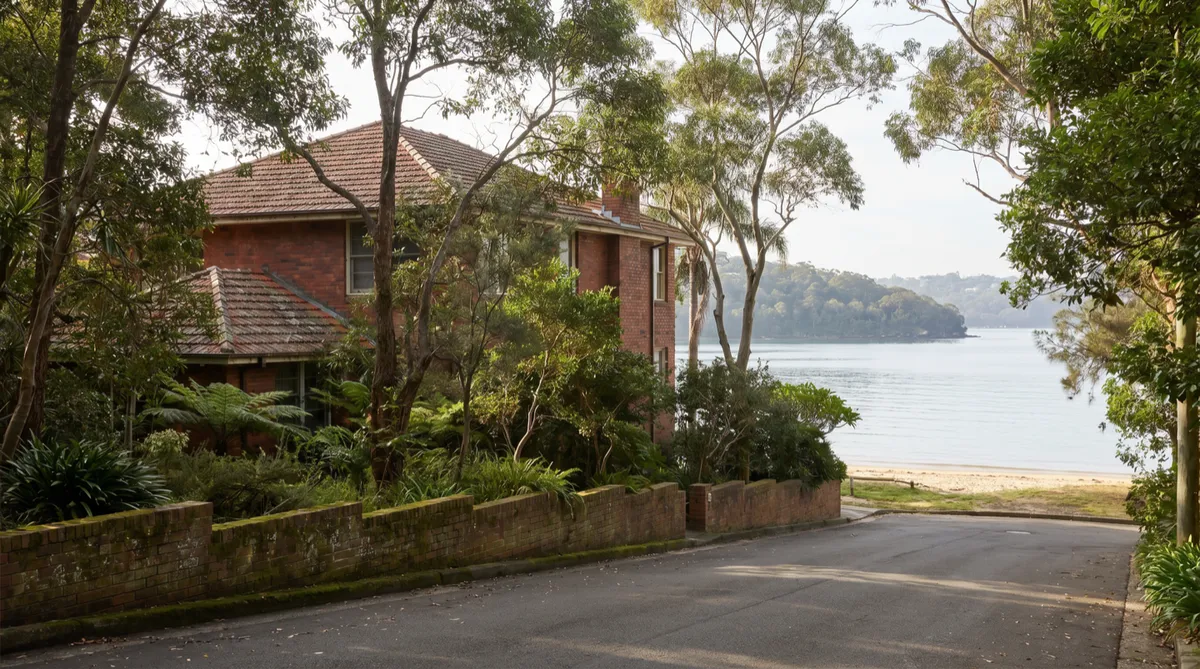
Clontarf, where the houses barely move
Down on the foreshore, Clontarf is small enough to walk in twenty minutes and tightly held enough that a for-sale sign is genuine news. Fewer than six hundred homes sit on the beach and the bays, and the great majority are lived in by the people who own them, often for a generation or more.
That barely-moving housing is exactly why a Clontarf clear-out is rarely a tidy. When a family finally does move on, or a much-loved home passes to the next generation, what has to be shifted is not a couple of bulky items. It is the shed, the under-house, the garage and forty years of a garden all at once, decades deep and often full of things that matter. We take a clearance like that at the pace it needs, set aside whatever the family wants kept or handed down before anything is loaded, and never hurry anyone through it. When it is that kind of job, it is a downsizing or estate clearance, and it is handled quietly.
When the free run is the right call
Seaforth has an advantage the Manly flats do not. In a freestanding home here you can usually book Northern Beaches Council's bulky-goods collection in your own name, two free pickups a year, left out on the verge. For a couple of bulky items with no deadline on them, that is the sensible move, and we will tell you so rather than talk you out of something free.
What sends people up here to a crew instead is volume and gradient, not urgency. And the council run has a hard limit worth knowing: it takes bulky household goods, not builders' waste, so a reno strip-out is not something it will collect at all. A garden clear-out, a renovation tail or a decades-deep house is a truckload or three, and on a Seaforth block it has to be carried up the drive rather than dragged to the kerb. When it will not fit on a verge, will not wait for the next scheduled collection, or is the sort of thing the council does not take, that is our part.
Seaforth and Clontarf, in the numbers we work by
- Steep blocks stepping down to Middle Harbour, so the rubbish gathers low and the carry is always uphill to the street
- One road in and out over the Spit Bridge, which is why we book the pickup window around it rather than pretending the traffic is not there
- Freestanding homes can self-book the council pickup, so the jobs that reach us are the ones too big, too awkward, or too building-site for a verge
- Clontarf turns over so rarely that a clearance there is usually a whole home at once, not a single load
Clontarf dwelling figures from the most recent Census; council scheme verified against Northern Beaches Council, July 2026. The rest, the hill taught us.
Seaforth questions, straight answers
We are mid-renovation. Can you clear the old kitchen and the builder's leftovers?
Gladly, and at whatever stage you are up to. The old cabinetry, the torn-out carpet, the packaging, the offcuts and the bits the skip could not swallow are a normal pickup for us, and we will come back for the next wave if the reno runs in stages. The one thing we will not carry is the regulated stuff, asbestos sheeting, paint, chemicals or gas bottles. If any of that turns up we name it on the spot and hand you the details of a specialist licensed to take it.
My block is steep and the pile is right down the back. Can you still get it out?
Yes, that is the everyday shape of work on this hillside, not a special request. We barrow and carry the load up to the truck rather than dragging it across your garden, keep the wheels off the beds and the paths, and sweep the drive before we go. The climb is looked at when we quote and folded into the fixed price, so it never turns into a surprise at the top of the hill.
It is a Clontarf home that has not been touched in decades. Is that honestly one job?
It is, and it is one we take slowly. A clearance that has built up over a generation gets worked at the family's pace, across as many visits as it needs, with anything worth keeping or handing on set aside first. There is no countdown and no hard sell on a job like that. If you would rather read how it runs before you ring, the estate and downsizing page lays it out.
Should I just use the council pickup instead?
If it is one or two bulky household things and you can get them to the verge, honestly, yes, book the council run: it is free and it works. Ring us when the load is a truck rather than an armful, when it is builders' waste the council will not take, when it has to come up the drive rather than out to the street, or when there is a date on it the next scheduled collection will miss. We are the paid-and-today option, not a replacement for the free one.
Whereabouts do you go from here?
All through Seaforth and Clontarf, back up the hill to Balgowlah Heights and Balgowlah, and across to North Manly and Manly Vale. The whole southern-peninsula run is on the areas page.
Tell us what needs to go
Fill in the form and the callback comes from the crew, not a call centre. We look at the load, the whole number is settled before the first lift, stairs and all. Then it is carried down, swept up and gone, never left on the kerb.
- Small jobs taken seriously, one couch is plenty
- Fixed price agreed up front, no hourly surprises
- Same-day where we can, booked around your building